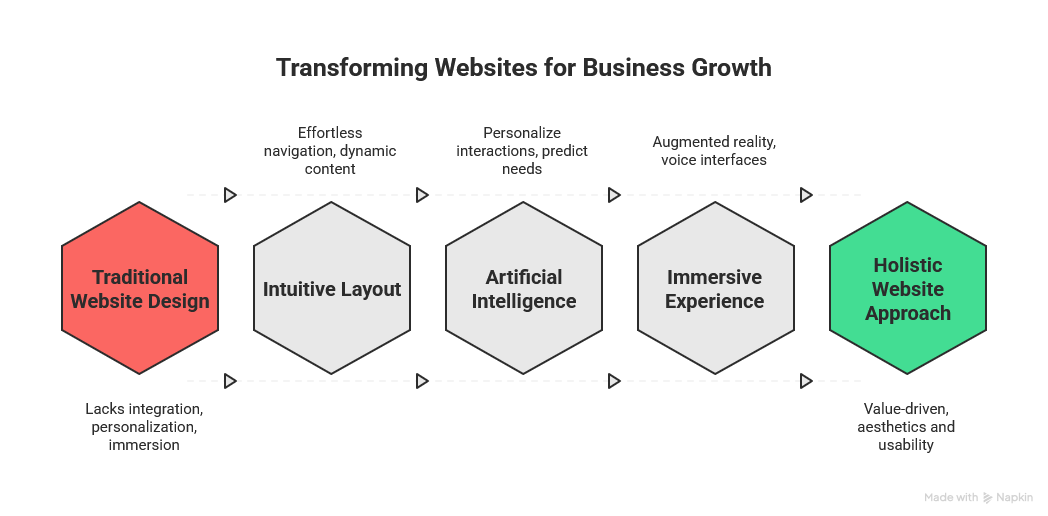
For years, businesses treated websites as digital brochures, designed once, refreshed occasionally, and judged mostly by how they looked. That model has been under strain for a while, but by 2026 it will finally break.
I say this not as a designer or a marketer, but as someone who has spent over a decade building, scaling, fixing, and modernizing production-grade web systems, systems that directly impacted revenue, user trust, and operational efficiency.
By 2026, a business website that is only visually appealing but architecturally shallow will quietly fail. Not with dramatic crashes, but with slow erosion: lower conversions, weaker trust, declining visibility, and missed opportunities.
The future business website is not a page. It’s a system.
2026 Is the Breaking Point for Traditional Business Websites
The expectations placed on websites have changed faster than most organizations realize.
Users today, especially B2B buyers, expect:
- Relevance on first interaction
- Speed across devices and networks
- Transparency around privacy and security
- Answers, not navigation
- Experiences tailored to their intent, not their patience
At the same time, businesses expect websites to:
- Generate qualified leads
- Support complex buyer journeys
- Integrate with CRMs, analytics, and automation
- Adapt to changing products and markets
- Perform under scale without constant rewrites
By 2026, the gap between what users expect and what most business websites deliver will be obvious, and costly.
Websites as Intelligent Systems, Not Pages
One of the biggest mindset shifts businesses must make is this:
A modern website is no longer a collection of pages. It’s an intelligent interaction layer between the business and its users.
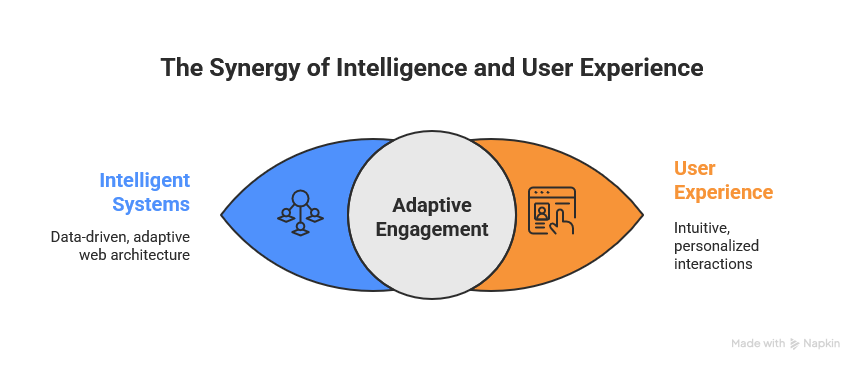
AI-Driven Personalization (Without the Gimmicks)
Personalization in 2026 isn’t about showing someone their name in a headline. It’s about:
- Adapting content based on intent, industry, or stage in the funnel
- Adjusting CTAs dynamically
- Surfacing the right information without forcing users to search
This doesn’t require flashy AI demos. It requires:
- Clean data flows
- Structured content
- Clear intent signals
- Thoughtful architecture
Most “AI-powered websites” fail because they bolt intelligence onto a brittle foundation.
Adaptive UX Based on Intent
A first-time visitor researching options should not see the same experience as a returning decision-maker evaluating vendors.
In 2026, intelligent websites will:
- Detect behavioral patterns
- Adjust navigation depth
- Simplify or expand content accordingly
- Reduce friction without hiding information
This is less about UI tricks and more about systems thinking.
Conversational Interfaces That Actually Help
AI assistants, smart forms, and guided interactions will be common—but only valuable when they:
- Understand business context
- Respect user intent
- Integrate with real data and workflows
An AI chatbot that can’t access pricing logic, documentation, or lead qualification rules is just noise.
Architecture That Actually Matters in 2026
Design trends come and go. Architecture decisions last years.
Headless and Composable by Default
By 2026, tightly coupled CMS-driven architectures will feel archaic.
Composable, headless architectures allow businesses to:
- Evolve frontend experiences independently
- Integrate AI, analytics, and third-party services cleanly
- Replace components without full rewrites
- Scale teams without stepping on each other
From experience, this isn’t about chasing trends, it’s about reducing long-term friction.
API-First, Cloud-Native, Edge-Ready
Modern websites must assume:
- Global users
- Variable network conditions
- Spikes in traffic
- Real-time integrations
That means:
- APIs as first-class citizens
- Stateless services
- Intelligent caching strategies
- Edge delivery where it makes business sense
Performance in 2026 is not a technical metric. It’s a revenue metric.
Trust, Security, and Compliance by Design
Trust is no longer abstract. Users actively look for signals.
Privacy-First UX
Privacy compliance isn’t just a legal checkbox, it’s a user experience decision.
By 2026:
- Consent flows must be clear, not manipulative
- Data usage must be transparent
- Privacy choices must feel intentional, not hidden
I’ve seen firsthand how trust-driven UX increases engagement and reduces bounce rates.
Security Signals Users Can See
Security shouldn’t live only in backend audits.
Users notice:
- HTTPS isn’t enough anymore
- How forms behave
- How data is requested
- How errors are handled
A website that feels secure converts better, because trust influences behavior more than features.
Performance, Accessibility, and Experience as Competitive Advantage
Performance Is Strategy
By 2026, performance expectations will be unforgiving.
It’s not just about load time. It’s about:
- Interaction readiness
- Smooth transitions
- Predictable behavior under load
Businesses that treat performance as a post-launch optimization will lose to those who design for it upfront.
Accessibility as a Default, Not a Retrofit
Accessibility is often discussed as compliance. In reality, it’s about:
- Reaching broader audiences
- Reducing friction
- Improving clarity for everyone
Engineering-led accessibility, baked into components and workflows, will outperform checkbox-driven implementations every time.
AI-Ready Content and the Evolution of SEO
Search in 2026 will not be limited to keywords and blue links.
Websites will increasingly be read by:
- AI agents
- Assistive tools
- Aggregators
- Automated decision systems
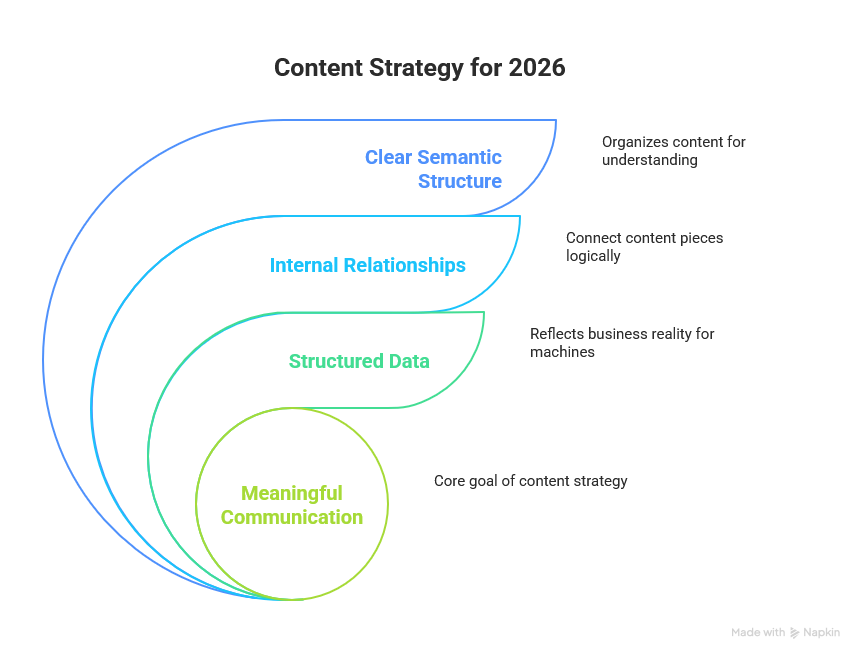
Content for Humans and Machines
This means:
- Clear semantic structure
- Strong internal relationships between content
- Structured data that reflects business reality
SEO will become less about gaming algorithms and more about communicating meaning clearly.
Businesses that invest in content architecture, not just content volume, will win long-term visibility.
From Marketing Asset to Revenue Platform
The most important shift I’ve seen in recent years is this:
The website is becoming the central revenue intelligence platform.
Deep Integration with Business Systems
In 2026, high-performing websites will:
- Integrate tightly with CRMs
- Feed analytics into decision systems
- Trigger automation workflows
- Support sales teams with behavioral insights
This requires engineering discipline, not plugins stitched together.
Decision Intelligence from User Behavior
The most valuable insights don’t come from vanity metrics. They come from:
- Drop-off patterns
- Content engagement depth
- Interaction sequences
- Time-to-decision signals
A website that can surface these insights becomes a strategic asset, not a cost center.
Common Mistakes Businesses Will Still Make in 2026
Despite all this, many companies will repeat the same errors:
Over-Design Without Performance
Visually impressive websites that:
- Load slowly
- Break on edge cases
- Struggle on mobile
- Fail under traffic
Design without engineering discipline is short-lived.
AI Gimmicks Without Strategy
Adding AI because it’s trendy, without data, governance, or purpose, will erode trust faster than doing nothing.
Ignoring Maintainability and Scalability
Websites that are hard to update, extend, or refactor become liabilities.
I’ve rebuilt enough of them to know: shortcuts always get repaid, with interest.
Preparing Today for the Website of 2026
The businesses that succeed won’t wait for 2026 to react.
They will:
- Treat websites as evolving systems
- Invest in architecture early
- Design for intelligence, not just aesthetics
- Measure success beyond page views
- Build with trust, performance, and adaptability in mind
A modern business website is never “done.” It’s alive, learning, adapting, and supporting growth.
As someone who has built and scaled real systems under real constraints, I can say this with confidence:
The companies that understand this shift early will not just have better websites. They will have a competitive advantage that compounds over time.